

10 White Brick Exterior House Designs That Blend Timeless Elegance With Modern Architecture
White brick exteriors have become a popular choice for homeowners who want a clean and welcoming look for their homes.
This style works with many different types of houses, from country cottages to sleek modern builds. White brick brings a bright and fresh feeling to any property.
A white brick exterior gives you a neutral base that pairs well with almost any accent color, material, or architectural detail.
You can combine it with dark trim for a bold look or natural wood for warmth.
The options let you create a home that fits your personal style while keeping a classic appearance that won’t go out of fashion.
This guide shows you ten different White Brick Exterior House Designs.
You’ll see examples with various window styles, roof colors, porch designs, and accent materials.
You’ll also learn about the design choices that make these exteriors work and what you need to know about taking care of white brick over time.
Whether you prefer bold black trim, warm wood details, soft gray mortar, or traditional shutters, the right combination can make a white brick exterior feel tailored to your home’s architecture.
Here are 10 White Brick Exterior House Designs
1) Modern farmhouse white brick with black window trim

Credit: legendhomestn
White brick creates a clean foundation for your modern farmhouse exterior. The painted white surface highlights your home’s architectural details and works well in any neighborhood setting.
Black window frames add sharp contrast against the white brick. This pairing brings a contemporary edge to traditional farmhouse elements while maintaining classic appeal.
The black trim defines your windows and creates visual interest. You can extend this look to other areas like your roofline or garage door for a cohesive design that feels both timeless and current.
2) All-white painted brick with natural wood accents

Credit: @txsizedhome
Natural wood accents create warmth against white brick exteriors. You can add wood elements through window frames, shutters, or front doors to break up the bright white surface.
Wooden pergolas and ceiling beams work well for covered entryways. These features add texture while keeping your home’s clean appearance.
The contrast between white brick and natural wood gives you a balanced look. This combination works for both modern and farmhouse-style homes.
3) White brick and dark charcoal metal roof contrast

Credit: courtatkinsgroup
A dark charcoal metal roof creates striking visual impact against white brick. The combination works because the strong contrast highlights your home’s architectural details and roofline.
This pairing gives you a modern edge while keeping a timeless feel. The dark roof draws the eye upward and makes your white brick appear even brighter.
You can choose between standing seam or metal panels in a matte charcoal finish. Both options provide clean lines that work well with the smooth surface of white brick.
4) White brick cottage with arched entry and shutters

Credit: green_and_living
A white brick cottage gains character when you add an arched entryway and classic shutters. The curved archway creates a welcoming focal point at your front door.
Shutters in soft colors like green, gray, or black provide visual contrast against white brick. They frame your windows and add traditional charm.
This design works well for smaller homes. The combination of white brick, an arched entry, and shutters gives you a cozy, timeless look that feels inviting.
5) White brick with black-framed floor-to-ceiling windows
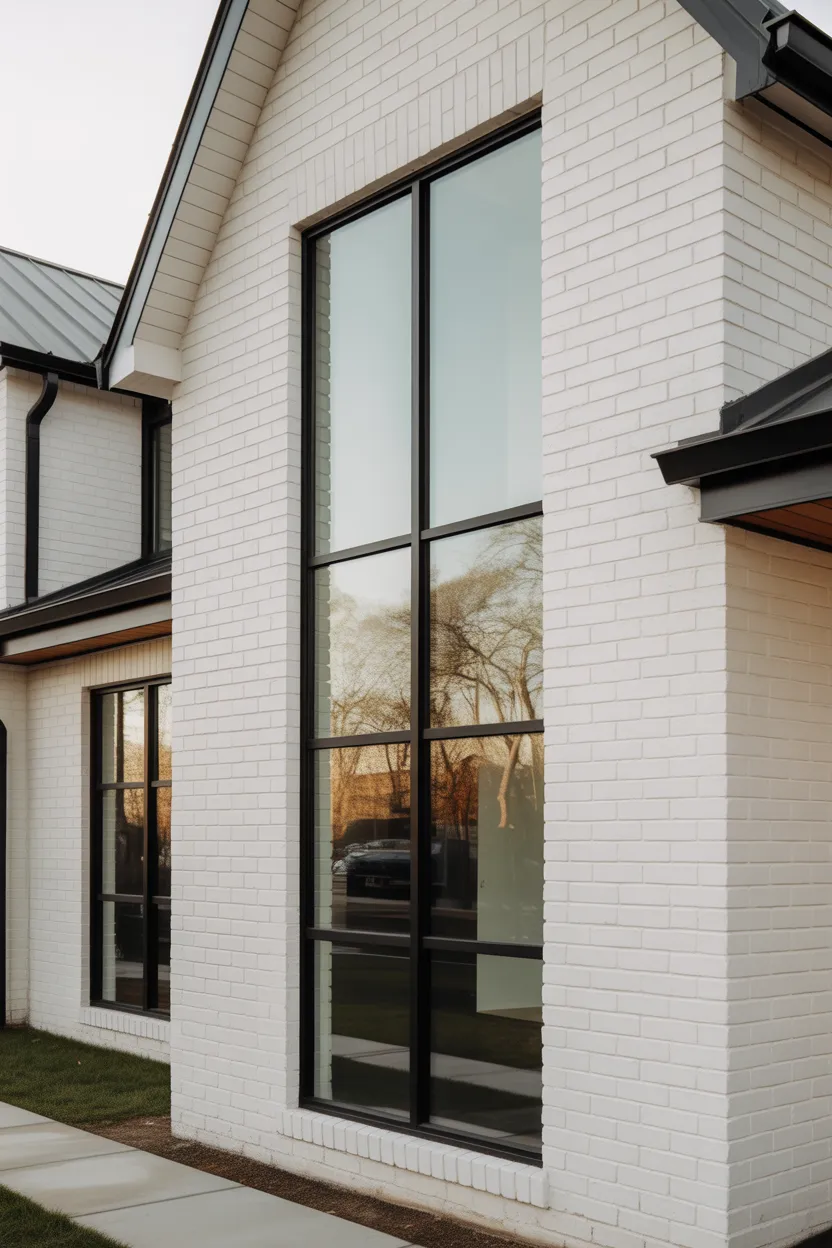
Floor-to-ceiling black-framed windows create a striking statement against white brick walls. These tall windows flood your interior with natural light while maintaining the bold contrast between black and white.
The slim black frames add a sleek, modern touch without overwhelming the design. You’ll notice how the vertical lines of these windows emphasize your home’s height and create a sense of openness.
This style works well for contemporary homes where you want to blur the line between indoor and outdoor spaces.
6) White brick facade with stacked stone base

Credit: fiscalettimasonryltd
A white brick facade paired with a stacked stone base creates visual interest through texture and depth. The stone base typically covers the lower portion of your home’s exterior, while white brick extends upward to complete the look.
This combination works well because the stone adds natural warmth and grounds your home visually. You can choose from various stone colors, including gray, tan, or charcoal, to complement the white brick above.
The design suits both modern and traditional architectural styles. The stone base also provides practical benefits by protecting lower walls from moisture and wear.
7) Two-tone white brick with soft gray mortar

Credit: usbrick
Gray mortar creates a subtle grid pattern that adds visual interest to white brick. The contrast between the white and gray gives your exterior more depth without being too bold.
This combination works well on traditional and modern homes. The soft gray tones down the brightness of pure white brick while keeping the look clean and fresh.
You can use this style on your full facade or combine it with natural wood accents. The mortar lines help define each brick and prevent the wall from looking flat or washed out.
8) White brick exterior with black front door focal point

Credit: Curtis Adams
A black front door creates instant drama against white brick. The dark color draws your eye to the entrance and makes it the star of your home’s exterior. This combination works because it’s simple yet powerful.
You can enhance this look with matching black hardware and light fixtures. The contrast feels clean and modern without being too bold. Your entrance becomes more inviting when framed by this classic pairing.
This design choice suits many architectural styles, from traditional to contemporary homes.
9) White brick and cedar pergola porch combination

White brick pairs beautifully with cedar pergola elements on your front porch. The natural wood tones of cedar create a warm contrast against crisp white brick walls.
Cedar pergolas add both function and style to your entrance. They provide shade while framing your porch with architectural interest. You can stain or paint the cedar to match your design preferences.
This combination works well for homes where you want to blend traditional brick with natural materials. The structured pergola beams define your outdoor space while maintaining visual connection to your house.
10) White brick with wraparound porch and tapered columns

A white brick house with a wraparound porch creates an inviting exterior that blends classic style with practical outdoor space. The tapered columns add architectural interest while maintaining clean lines that complement the brick.
This design works well for both traditional and craftsman-style homes. The white brick provides a neutral backdrop that pairs nicely with natural wood elements on the porch.
You can enhance the look by adding brick steps and choosing darker trim colors for contrast. The wraparound porch gives you extra room for seating and entertainment.
White Brick Exterior Design Comparison
| Design style | Best accent | Best for |
|---|---|---|
| Modern farmhouse | Black trim | Clean contrast |
| Cottage | Shutters + arched entry | Cozy charm |
| Contemporary | Floor-to-ceiling windows | Indoor-outdoor flow |
| Traditional | Gray mortar + shutters | Subtle detail |
| Craftsman | Porch columns + wood | Warm curb appeal |
Key Design Principles for White Brick Exteriors
White brick exteriors require careful attention to color pairings, material textures, and decorative elements to create a polished look. These three design aspects work together to define your home’s character and curb appeal.
Color Palette Coordination
Your trim color sets the entire tone for a white brick exterior. Black-framed windows and doors create sharp contrast and give your home a modern edge. This combination works well for both traditional and contemporary styles.
White or cream trim offers a softer, more subtle look. This approach makes your home feel lighter and more approachable. It works particularly well for cottage and farmhouse designs.
Consider these popular trim pairings:
- Black trim: Modern, crisp, high-contrast
- Dark gray trim: Softer than black, still contemporary
- Natural wood trim: Warm, organic, inviting
- White trim: Classic, bright, seamless
Your roof color also matters. Dark roofs like slate gray or charcoal provide grounding weight. Light roofs create an airy, cohesive appearance from top to bottom.
Texture and Mortar Choices
The mortar between your bricks affects the overall visual impact more than you might expect. White or light gray mortar creates a uniform, seamless surface. Dark mortar adds definition and makes individual bricks stand out.
Brick texture ranges from smooth and refined to rough and rustic. Smooth white brick suits modern and minimalist designs. Textured brick adds depth and works well for farmhouse or traditional homes.
Consider the brick size and pattern too. Standard running bond is versatile and timeless. Stacked bond creates clean horizontal lines for a contemporary feel.
Architectural Accents
Natural materials add warmth to white brick exteriors. Stone accents around doorways or along foundation lines create visual interest. Wood elements like shutters, beams, or porch columns soften the bright white surface.
Metal fixtures and details complete your exterior design. Black metal light fixtures reinforce a modern aesthetic. Bronze or brass hardware adds a traditional touch. Your gutter and downspout colors should match your trim for a cohesive look.
Landscaping plays a supporting role in your exterior design. Dark green shrubs provide natural contrast against white brick. Colorful flowers draw the eye and add personality without competing with your home’s clean lines.
Common White Brick Exterior Mistakes to Avoid
Good points to include:
- Using too many accent materials at once.
- Choosing a white paint color without testing it outside.
- Ignoring mortar color.
- Pairing white brick with a roof color that looks too flat.
- Using harsh pressure washing that can damage mortar.
Maintenance and Longevity Considerations
White brick exteriors offer exceptional durability with minimal upkeep requirements, though they need specific care to maintain their appearance. Understanding how these surfaces respond to weather and knowing proper cleaning methods will help your home look great for decades.
Weather Resistance
White brick naturally withstands harsh weather conditions better than many other exterior materials. The brick itself resists damage from rain, wind, and temperature changes because of its dense composition and fired clay construction.
Your white brick exterior can last for many decades or more with proper installation. The mortar between bricks requires more attention than the brick itself. You should inspect mortar joints every 20-30 years for cracks or deterioration.
Key weather-related benefits:
- Resistant to rot and insect damage
- Won’t warp or twist in extreme temperatures
- Handles freeze-thaw cycles without cracking when properly maintained
- Provides natural insulation that reduces energy costs
Paint or whitewash on brick may need refreshing every 10-15 years depending on your climate. Coastal areas with salt air or regions with frequent storms may require more frequent checks.
Cleaning and Care
You should clean your white brick exterior once or twice per year to prevent dirt buildup and staining. Use a garden hose with a spray nozzle for routine cleaning, working from top to bottom to avoid streaking.
For tougher stains, mix one part white vinegar with five parts water. Apply this solution with a soft brush and rinse thoroughly. Avoid pressure washers above 1,500 PSI as they can damage mortar joints and brick surfaces.
Check for efflorescence, which appears as white powdery deposits on brick. This occurs when water pulls salts to the surface. You can remove it with a dry brush or specialized brick cleaner.
Seal any cracks in mortar joints promptly to prevent water infiltration. Trim vegetation at least 12 inches away from brick walls to maintain airflow and prevent moisture damage.


